





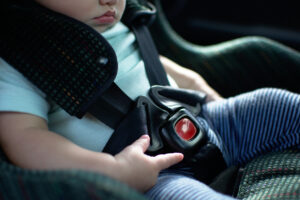
Every state requires children to ride in specially designed seats. Utah child car seat laws broadly require parents to use child restraint devices for children under eight, without specifying the exact type. The state issues guidance to parents so they can pick a car seat that will protect their children in car accidents in Salt Lake City, UT.
Utah law gives parents the right to pursue financial compensation on behalf of their children. A Salt Lake City car accident lawyer from McMinn Law Firm helps parents understand their options when their child is injured in a car accident. Contact us at (512) 474-0222 and get a free consultation.
How McMinn Law Firm Can Help After A Car Accident In Salt Lake City, UT
Our law firm was established over 20 years ago to represent car crash victims against negligent drivers and powerful insurance companies. Our Salt Lake City personal injury lawyers bring over 40 years of legal experience to your case.
If you or your child suffers an injury caused by someone else, we can assist you with the following:
- Evaluating your legal claims after discussing the accident
- Collecting records and evidence for an insurance claim
- Negotiating with the at-fault driver’s insurer for a payout to resolve the case
- Taking the at-fault driver to court if their insurer refuses to discuss a settlement
A car accident can endanger your child’s health and financial future. Contact us to schedule a free consultation with a Salt Lake City car accident attorney to learn about the options you have for seeking monetary compensation to protect your child’s future.
Utah Car Seat Requirements
State car seat laws fall into two categories. Some states detail the type of restraint device required based on the child’s age, height, or weight. For example, these states will tell you the age or weight your child must meet to transition from a rear-facing car seat to a forward-facing car seat.
Other states broadly require child restraint systems but do not specify the type of restraint. These states leave the decision to the parents, seat manufacturers, and safety experts. Utah falls into the second category.
Utah’s child protection law only sets two requirements for drivers with children in their vehicles:
- Children under eight must use a child restraint device
- Children between eight and sixteen must use a seat belt
Utah’s law specifically places this legal responsibility on the driver. Thus, it covers parents and other relatives, as well as carpool drivers, friends, and anyone else transporting a child 16 or younger.
The only drivers exempt from the law are taxi and rideshare drivers. In these situations, the adult passenger riding with the child is responsible for providing a car seat or a booster seat.
Best Practices for Choosing a Child Restraint System
In the absence of specific requirements, the state publishes a flyer with best practices for selecting a car seat. The guidance relies heavily on the manufacturer’s instructions. Thus, you must read the instructions with your product to know when to use it.
However, the state provides some guidance for selecting a child restraint system.
Rear-Facing Car Seat
Rear-facing car seats place the child on their back with their head pointed toward the front of the vehicle. The child is secured with a five-point harness to reduce the risk of ejection in a rollover crash.
The state advises using a rear-facing car seat from birth until the child outgrows the manufacturer’s specifications. The state suggests that the manufacturer typically designs these products for use until the child reaches their second birthday and 30 pounds.
Forward-Facing Car Seat
A child sits upright and faces the vehicle’s front while riding in a forward-facing car seat. Again, the child is restrained with a five-point harness to reduce the risk of being thrown out of the seat during a head-on or rear-end crash.
The state recommends using a forward-facing car seat from the time the child outgrows their rear-facing car seat until they reach the seat’s height and weight limits.
Booster Seat
A booster lifts the child high enough that the car’s seat belt fits them correctly across the hips and shoulders. The state suggests waiting to use a booster seat until the child is at least age four and 40 pounds.
Liability for Child Injuries in Utah Car Accidents
The liability for child injuries suffered in a car accident will fall on the negligent driver. Importantly, Utah modifies its comparative negligence rules in these cases.
Normally, a victim can share in the blame for their injuries when they act negligently by failing to protect themselves. For example, a motorcyclist might bear partial blame for their head injuries if they were not wearing a helmet during their crash.
However, this rule does not apply to parents who fail to put their children in car seats. The child is entitled to full compensation from the negligent driver, even though their parent may have acted negligently.
Contact Our Salt Lake City Child Injury Lawyers for a Free Consultation
Car accidents in Salt Lake City almost always result from negligent driving. If your child has been injured, contact McMinn Law Firm for a free consultation. Our Salt Lake City child injury attorneys can explain your legal options and how we can pursue compensation for the losses you and your child incurred.
