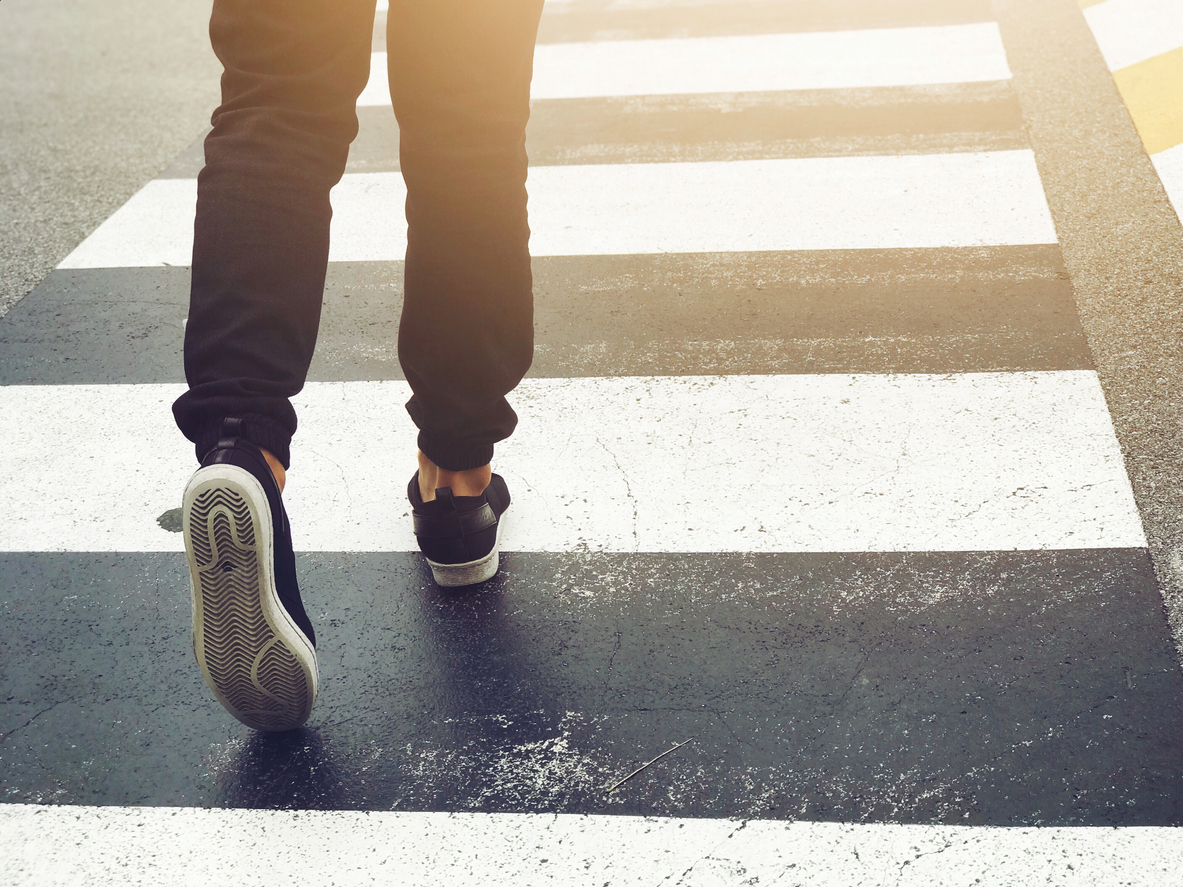
If you’ve spent any time driving, biking, or walking around Austin, you may have noticed painted crosswalks, narrowed lanes, speed feedback signs, or new pedestrian islands popping up across the city. Most of that infrastructure is part of Austin’s Vision Zero program, a citywide initiative built around a simple but ambitious idea: that traffic deaths and serious injuries are preventable, and that zero is the only acceptable goal.
Austin formally adopted Vision Zero in 2016, making it one of the first major Texas cities to do so. Since then, the city has poured hundreds of millions of dollars into safer street design, new pedestrian crossings, speed management projects, and data-driven safety improvements across high-crash corridors. There’s been real progress in some areas, and real frustration in others.
For people who’ve been injured in Austin traffic crashes, Vision Zero is more than a policy. It’s directly relevant to your legal rights and your ability to recover compensation. Here’s what you need to know.
What Is Austin’s Vision Zero Program?
Vision Zero is a road safety framework that originated in Sweden in the 1990s and has since been adopted by cities across the world, including Austin, New York City, Seattle, and San Francisco. The core premise is that traffic deaths are not accidents; they’re predictable and preventable outcomes of a system that can be redesigned.
Austin’s program coordinates across multiple city departments, including Transportation and Public Works, Austin Police, Austin Public Health, and others, to address crashes using engineering, enforcement, and education. Rather than waiting for crashes to happen and reacting, Vision Zero uses crash data to identify high-risk locations and make proactive investments before more people get hurt.
Since its launch, Austin’s Vision Zero program has delivered:
- Over 500 new pedestrian crossings across the city
- More than 320 miles of new or upgraded sidewalks
- Over 600 Safe Routes to Schools projects
- Speed calming treatments on high-crash corridors like South Pleasant Valley, Barton Springs Road, and Bluff Springs
- Quick-build safety improvements at 16 intersections, which cut pedestrian injury crashes at those locations by 56%
- Temporary pedestrian barriers on I-35, where fatalities dropped significantly after installation
Despite those gains, the overall fatality picture has been harder to move. Austin recorded 97 traffic deaths in 2024, up from 90 the year before. Part of the challenge is jurisdictional: roughly 65% of serious injuries and fatalities in Austin occur on roads controlled by TxDOT, not the city. That creates a real gap between what Austin wants to do and what it has the authority to do.
Where Is Austin Focused Right Now?
Austin’s Vision Zero program doesn’t try to fix every road at once. It uses crash data to identify what the city calls its High Injury Network, the roughly 8% of streets responsible for the majority of serious and fatal crashes. These are the corridors and intersections that keep showing up in the data year after year.
Some of the areas that have seen significant Vision Zero investment include:
- Barton Springs Road, where a 2023 safety pilot after a crash injured 10 people, has since reduced daily speeding by 65% over the six-month pilot period
- Bluff Springs Road, where lane conversion work produced a 30% reduction in crashes
- South Pleasant Valley Road, where speed calming reduced excessive speeding by 60 to 70%
- East Austin corridors in neighborhoods identified as Equity Analysis Zones, where Vision Zero prioritizes investment in historically underserved communities
- I-35, where temporary pedestrian barriers have reduced fatalities, and new grade-separated crossings are planned as part of the Capital Express expansion project
The program has also launched a Left-Turn Calming Pilot at intersections across the city. After quick-build safety treatments were installed at 16 intersections, crashes involving left-turning vehicles and pedestrians dropped 46%, and injury crashes specifically fell 56%. These are not small numbers; they represent real lives that didn’t get turned upside down.
What Does Vision Zero Mean for Accident Victims in Austin?
Here’s where this gets personal. If you were hurt in a crash on an Austin road, whether you were driving, walking, riding a bike, or on a scooter, Vision Zero’s data and programs can matter directly to your injury claim.
Crash Data Is Public and Accessible
Vision Zero maintains detailed, publicly available crash data and interactive maps for Austin. If you were hurt at a particular intersection or on a specific corridor, there’s a good chance that location has a documented crash history. An attorney can use that data to establish that the dangerous condition at the site of your crash wasn’t new or unknown; it was a known, recurring problem.
That kind of evidence is valuable, because it can support an argument that the responsible party, whether that’s another driver, a property owner, or a government agency, knew or should have known about the risk.
Government Liability Has Limits, But It’s Not Zero
If your crash happened on a poorly designed road, at a dangerous intersection that had been flagged for safety improvements, or in a construction zone with inadequate signage, you may wonder whether the city or TxDOT bears some responsibility. The answer is complicated.
Texas law gives government entities some protection from lawsuits through sovereign immunity, but that protection is not absolute. Under the Texas Tort Claims Act, you can pursue a claim against a government entity in certain circumstances, particularly when the injury involved a motor vehicle operated by a government employee, or when a dangerous condition on government-owned property caused the harm and the entity had actual notice of it.
These claims are procedurally complex and time-sensitive. Texas requires injured people to file a formal notice of claim against a government entity within six months of the incident, which is much shorter than the standard two-year statute of limitations for other personal injury cases. Missing that window can permanently bar your claim, so if you think a dangerous road design played a role in your crash, don’t wait.
Pedestrian and Cyclist Crashes Deserve Serious Attention
Vision Zero’s own data shows that 30% of all serious or fatal pedestrian crashes in Austin between 2020 and 2025 happened between 8 PM and 5 AM, and that people experiencing homelessness account for 40 to 60% of cyclist and pedestrian fatalities in the city. These numbers reflect a painful reality: the most vulnerable road users face the greatest risk, often on roads that have never been designed with their safety in mind.
If you were hit by a car while walking or riding a bike in Austin, you have rights under Texas law regardless of where the crash happened or what you were doing. Texas law does not require you to be in a marked crosswalk to have the right of way in all situations, and a driver who hits a pedestrian or cyclist is not automatically absolved of liability. A pedestrian accident attorney or bicycle accident lawyer can help you understand what your claim is worth.
What Should You Do After an Austin Traffic Crash?
Whether your crash happened on a Vision Zero priority corridor or somewhere entirely off the city’s radar, the steps you take in the hours and days afterward matter. Here’s what we tell our clients:
Get Medical Care Right Away
See a doctor the same day if at all possible, even if you feel okay at the scene. Adrenaline is good at masking pain, and injuries like concussions, internal bleeding, and soft tissue damage often don’t show their full impact until 24 to 72 hours later. A same-day medical record also makes it harder for an insurance company to argue later that your injuries weren’t serious.
Document the Scene
Take photos of everything you can: the vehicles, the road conditions, any skid marks, the intersection signage, and the lighting. If a crosswalk signal isn’t working, photograph it. If the pavement was cracked or a lane marking was faded, photograph that too. Details that seem minor at the time can later become important evidence.
Get Witness Information
If anyone saw what happened, other drivers, pedestrians, and nearby business owners- get their name and a way to contact them before you leave the scene. Witness accounts carry real weight in disputed liability situations, and they’re much harder to track down weeks or months after the fact.
Be Careful With Insurance Companies
The other driver’s insurance company is not on your side. Adjusters are trained to minimize payouts, and they may reach out quickly with a settlement offer that sounds reasonable but doesn’t come close to covering your long-term medical costs, lost income, or pain and suffering. Don’t accept any offer or give a recorded statement without first speaking to a lawyer.
Talk to an Austin Personal Injury Lawyer
An attorney who knows Austin’s roads, Vision Zero’s data, and Texas personal injury law can make a real difference in what you’re able to recover. Your lawyer can pull crash history for the location of your accident, identify all potentially liable parties, handle communications with insurance adjusters, and fight for compensation that actually reflects what you’ve been through.
McMinn Law Firm Is Here to Help
At McMinn Law Firm, we’ve helped injured Austinites recover compensation after car accidents, pedestrian crashes, bicycle collisions, and more. We know this city, we know these roads, and we know how to build a strong case when someone else’s negligence has turned your life upside down.
If you’ve been injured, contact your nearest McMinn Law Firm location to schedule a free consultation today. We proudly serve clients throughout Austin, TX, in Travis County.
McMinn Law Firm – Austin, TX Office
502 W 14th St, Austin, TX 78701
(512) 474-0222